
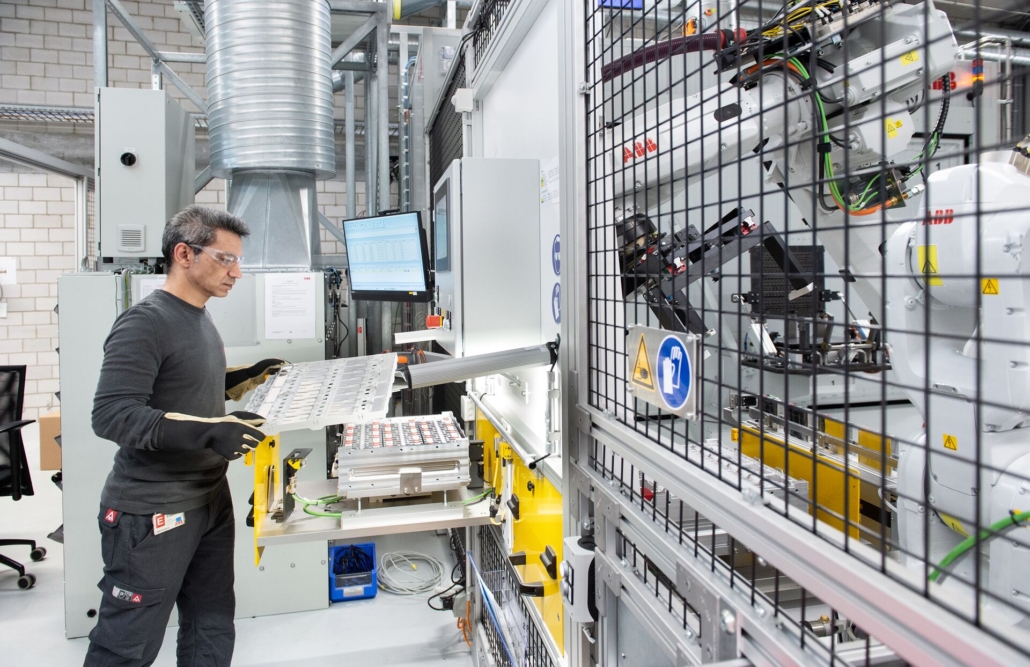
Designing a machine safety solution for today’s workforce
To meet the needs of the modern workforce, equipment manufacturing OEMs must design built-in safety solutions that are not only safe but also promote productivity and maximize uptime.
Manufacturing environments are inherently complex and dynamic—from the rhythmic hum of automated machinery to the frantic pace of many production lines. Due to high employee turnover and the struggle to fill critical labor gaps, especially roles requiring advanced skills and experience, easy troubleshooting and simple-to-follow safety solutions are a must. Last year, the manufacturing sector saw a turnover rate of more than 28%, and over 61% of U.S. manufacturers report struggling to fill those critical labor gaps.
Why a well-though-out machine safety solution matters more than ever
Every minute of unplanned downtime, whether due to an accident or the inability to troubleshoot/fix a problem quickly, can results in thousands of dollars of lost revenue. Accidents can result in fines, machines shutting down until safety issues are resolved, and negative impacts on employee morale— to name just a few challenges. Issues in troubleshooting/quick fix often stem from unfamiliarity with the machine or from the lack of easy access to problem areas, requiring guarding to be removed.
Machine safety solutions need to be well thought out with features like multiple access points, doors or hatches rather than removable guards, devices that can be installed easily, and indicators that are easy to understand. Let’s look at some of these key areas:
Doors and hatches – Modern manufacturing equipment has many more access points than past designs. Even removable guards designed to ensure safe operations are attached in ways that make them easier to remove. All of these access points must be monitored continuously to ensure guards are in place and doors are closed so operators (and anyone around the machine) remain safe with no risk of injury from internal moving parts.
Utilizing non-contact safety sensors gives manufacturers a wide array of benefits. Non-contact switches have no mechanical wear, improving lifespan/uptime when compared to typical gate switches. A large detection range compensates for door sagging over time, reducing false stops to machinery. Advanced LED indicators show whether doors are open or closed.
Openings in machine guarding – Workers may need to access potentially dangerous parts of a machine multiple times during a shift. Providing easy-access openings decreases cycle times; therefore, increasing productivity. However, these openings require safeguards to ensure the machine is stopped when anyone is in the area.
Light curtains offer a very easy, production-friendly way to monitor these openings as they put safety on autopilot. When someone breaks the plane of the light curtain, the machine is automatically stopped. Indicators, like those on the ABB Orion Light Curtains and Grid, display alignment and output status right on the light curtain, simplifying troubleshooting. M12 quick connects and rotation brackets also allow for quick setup or adjustment.
Safety Solution Controls – When implementing devices like non-contact safety sensors, light curtains, and other safety devices, choosing the right controller can maximize safety. The controller should be easy to understand, flexible, and offer extensive diagnostic features to maximize uptime. For example, the ABB Pluto Safety PLC uses LED indicators to display the status of all devices and error codes to make troubleshooting easier no matter the employee’s skill level.
Maximizing uptime by design
Maximizing uptime has never been more vital as manufacturers face increasing pressure to stay ahead in today’s highly competitive markets. Even brief periods of unplanned downtime can have a far-reaching impact on production schedules, profitability, and market reputation. In high-turnover environments, the risk of accidents rises, making easy-to-follow yet effective safety solutions not just a compliance requirement, but also a critical business priority.
OEMs have a unique opportunity to support their customers by embedding robust safety features into every machine they sell. By prioritizing safety at the design stage, OEMs empower manufacturers to reduce the likelihood of injuries and unexpected stoppages, helping them improve uptime metrics and maintain their market edge. When safety and productivity go hand in hand, everyone wins.
See related blog post “Energizing uptime: 4 technologies that improve system reliability in warehousing and logistics.”
—
Product Marketing Specialist