5 industrial-scale energy optimization technologies
The digital transformation of the industrial sector, accelerated by advancements in automation and artificial intelligence (AI), has driven up energy consumption worldwide. As commercial electricity rates inevitably rise alongside increasing demand, industrial consumers need innovative solutions to help them keep costs under control. Electrical OEMs are uniquely positioned to empower their industrial clients with advanced energy optimization solutions.
In a rapidly evolving industrial landscape, the push towards increased automation and the integration of artificial intelligence (AI) is driving up demand for electricity. Although agreements between utilities and major industrial consumers are often negotiated, commercial electricity rates are not immune to the laws of supply and demand. Prices rise when consumption escalates beyond what current generation sources can easily fulfill.
To keep costs under control, industrial consumers can deploy a couple of strategies. Notably, a trend toward in-house power generation is gaining momentum, with onsite renewables, microgrids, and Battery Energy Storage Systems (BESS) becoming increasingly common. A survey conducted by Bloom Energy in 2024 found that 30% of data centers anticipated generating at least a portion of their power onsite by 2030 – up from 13% in a survey conducted just 7 months earlier.
Additionally, many companies seek to optimize their energy consumption to reduce overall electricity use. Energy management technologies allow businesses to lower operational costs by increasing energy efficiency, adjusting production schedules to off-peak hours, and participating in demand response programs. In addition to reducing the financial burden of rising energy costs, these strategies also align with broader sustainability goals.
5 levels of advanced energy management solutions
OEMs can help their industrial customers hit their targets by providing advanced energy solutions that give them the insights and control they need. These solutions can be broken down into five categories:
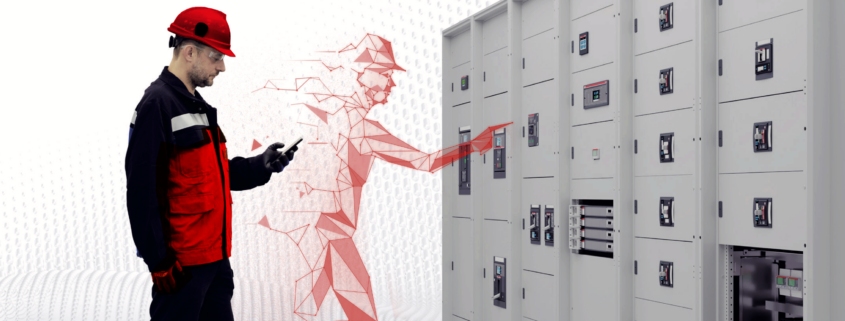
- Commissioning applications streamline commissioning, diagnostics, and testing. A good example of a commissioning tool is ABB’s EPiC app. Through a user-friendly interface, the EPiC app enables the seamless creation and application of circuit breaker settings from any device via Bluetooth connectivity. The commissioning process is further simplified by allowing these settings to be saved and then applied to additional circuit breakers as they are added. These apps also contribute to effective energy management by improving asset management throughout the lifecycle of the asset.
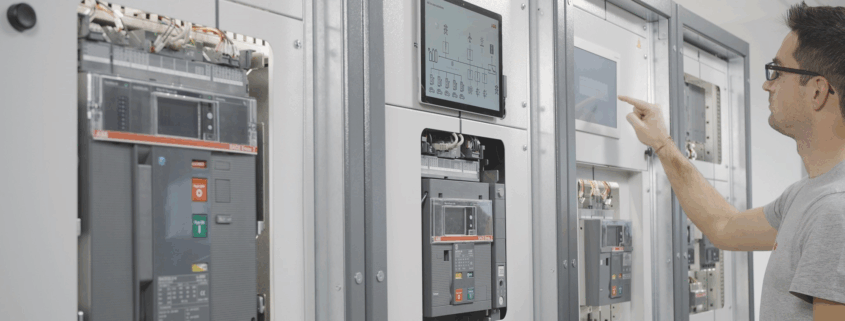
- Data visualization devices provide real-time monitoring of systems and remote control. The Lite Panel Pro, ABB’s next-generation switchboard panel display monitors voltage, current, power, and energy consumption to provide insights that help facility managers optimize energy usage. Up to 90 low-voltage devices can be connected to the Lite Panel Pro. As new devices are added to the system, automatic detection further simplifies commissioning and energy monitoring
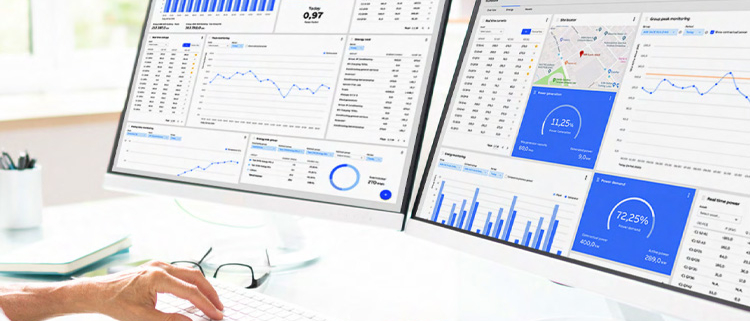
. - Energy management applications take power optimization to the next level by providing end-to-end energy monitoring, analysis, and optimization across single or multiple sites. Energy management applications often provide a visual representation of trend data and energy consumption for different areas of the business, making them a serious weapon in the fight to lower an organization’s carbon footprint and power consumption. ABB’s premier energy management system, ABB AbilityTM Energy Manager, has helped industrial consumers lower their electricity expenses by as much as 30%.
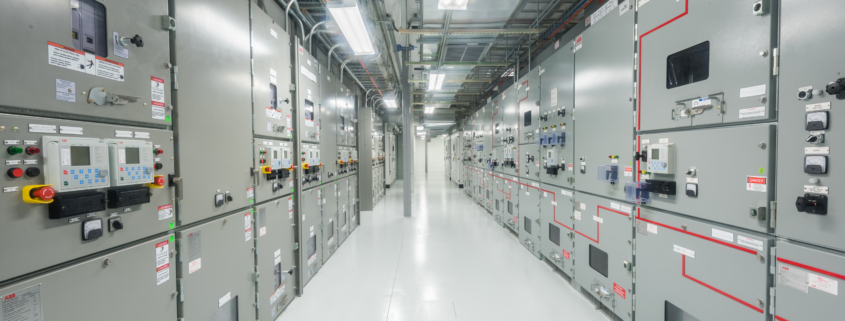
- Substation SCADA and centralized power monitoring control systems are typically used by large, industrial facilities. While deploying a customer-owned substation and accompanying supervisory control and data acquisition (SCADA) system is a significant investment, it can provide the enterprise with greater control over the reliability and stability of electrical service, which is crucial for critical operations in industries like manufacturing, data centers, or healthcare.
- Microgrid control solutions are often used by large industrial consumers to manage and optimize onsite power generation, often from distributed energy resources (DERS), such as solar and other renewable sources. Since it’s still rare for a business to generate 100% of their power onsite, these systems also help control the flow between the microgrid and the main grid. By increasing visibility and control, microgrid solutions help ensure a reliable flow of electrical power and give the consumer the power to choose the most cost-effective energy sources.
Promoting energy optimization tool adoption: Seeing is believing
Not every energy management solution is appropriate for every customer. While many electrical OEMs work with large, industrial users that could benefit from advanced energy management systems, if not substation SCADA or microgrid control solutions, they are likely to have many less advanced customers as well. Data visualization and control devices like the Lite Panel Pro are a good way to introduce these customers to the benefits of energy management. The bright, easy-to-read display resonates quickly with facility managers, providing real-time insights and enhanced diagnostics to visualize how data can optimize energy consumption and reduce downtime. By supporting integration with commissioning applications, energy management platforms, and microgrid controls, such devices help future-proof energy strategies, enabling OEMs to deliver tailored solutions that align with their clients’ strategic and financial goals.
Future-proofing energy management
As the world transitions from fossil fuels to an all-of-the-above energy strategy, there will continue to be times when demand threatens to outstrip supply. New demands, such as AI and EVs, will exacerbate the challenge, leading to even more volatile swings in energy prices. Electrical OEMs are on the front line of the battle against the rising cost of power. Increasingly, industrial customers count on their OEM partners to deliver energy management solutions that combine electrical components with software, apps, and connectivity, giving them the power to take control of their energy usage.
See related blog post “The digital transformation of energy management.”
—
Mike Hoppe
US Product Marketing Director – Digital Portfolio
Babu Chinnasamy
Product Marketing Manager – Automatic Transfer Switches
John McHale
ABB AbilityTM – Smart Power